
Stock
Choose the correct stock: 1” × 2” tube, 1/8” wall.
Objective: Make one part, in front of a mentor, without skipping a safety step. The member is asked to make the part on the drawing as the assignment.
Glasses on. Hair tied back. Closed-toe shoes. Cleanup should not be skipped and is part of our Safety Plan.
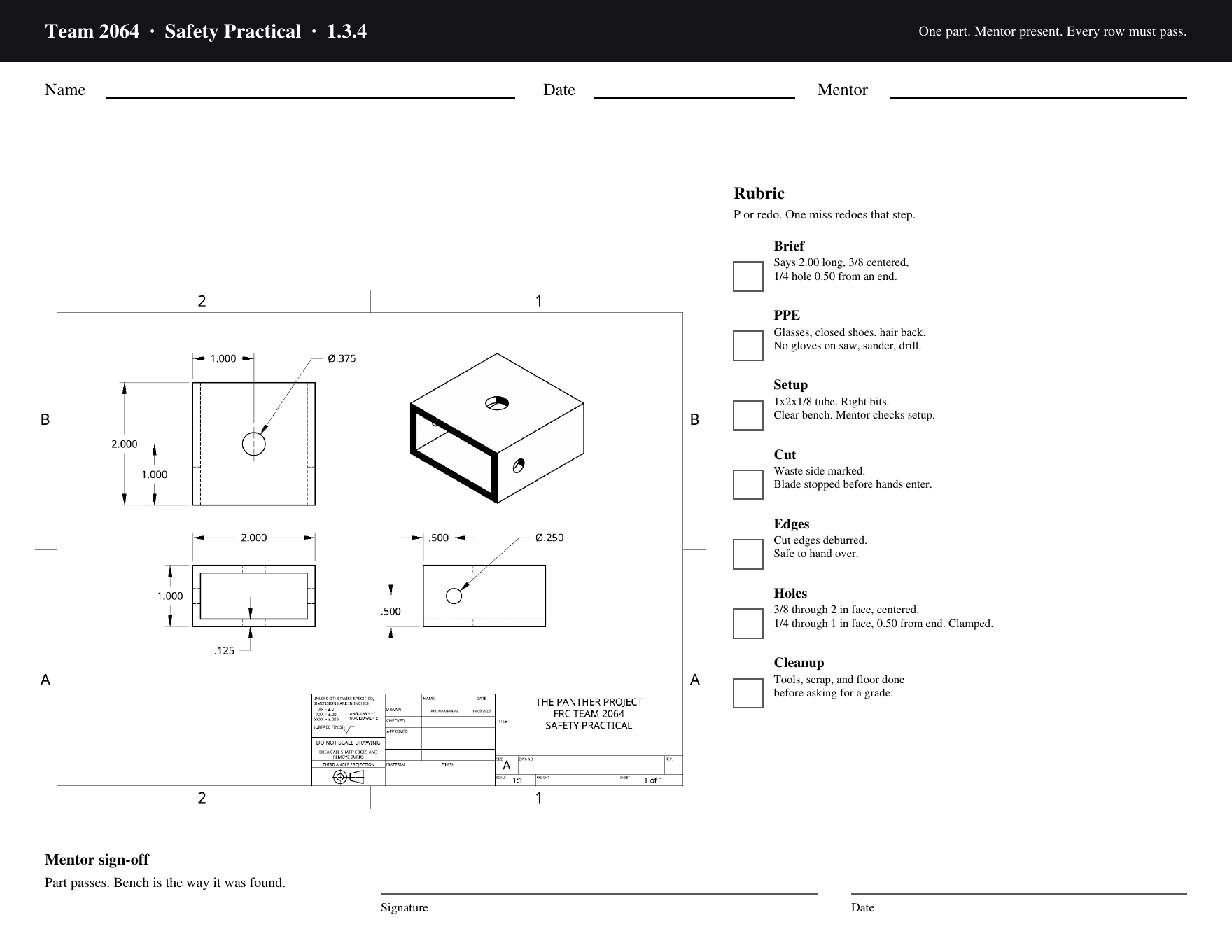
Cut length, hole size, and hole location come from this sheet. Do not guess.
Stock
Choose the correct stock: 1” × 2” tube, 1/8” wall.
Before you start
Say the length and both holes back to the mentor, be able to read the drawing.
Pass
Mentor signs the sheet when complete. Bench and machines are left the way you found them.
Read the task. Say the cut length and both hole sizes and locations before you touch stock.
Pick a space. Clear bench.
Get the tools. Marker, caliper, the saw you were assigned, drill, both bits, and a vise or clamp.
Get the material. The tube on the drawing, not a leftover that is close.
Mark the cut. Measure from a clean end. Mark the waste side so the 2.00 length is still there after the kerf.
Cut. Mentor checks the setup. Cordless saw with the stock in a vise, or the horizontal bandsaw with the stock clamped and the guard in place.
Stop the blade. Wait until it is still before you reach in.
Sand the edges. Sander off when not using, don’t walk away from a spinning machine. Deburr the cut. No gloves.
Mark the holes. Measure from the edges you just cut. Center punch the 3/8 and the 1/4 hole in the right location.
Drill. Clamp the part in vise. Bit matches the callout. Mentor checks the clamp and the bit. Stop the chuck before you move the part. Then the other hole.
Clean up. Tools back. Scrap in the bin. Bench brushed. Floor clear. Battery on charger if it needs it.
A mentor to review.
| Step | Pass | Not a pass |
|---|---|---|
| Brief | States length and both holes before starting | Starts from memory |
| PPE | Glasses, shoes, hair, no gloves on rotating tools | Fixes it only after being told twice |
| Setup | Stock and bits match the drawing; bench is clear | Wrong stock, wrong bit, or a cord across the walk |
| Mark and cut | Mark is on the waste side; saw stops before hands enter | Cuts short, holds stock by hand, or reaches in early |
| Edges | Cut edge deburred; part is safe to hand over | Sharp edge left on the cut |
| Holes | Both sizes and locations match; part was clamped | Handheld part, wrong bit, or hole in the wrong face |
| Cleanup | Tools, scrap, and floor done before the grade | Leaves the bench for someone else |
Answered: 0 / 0 (0%)